
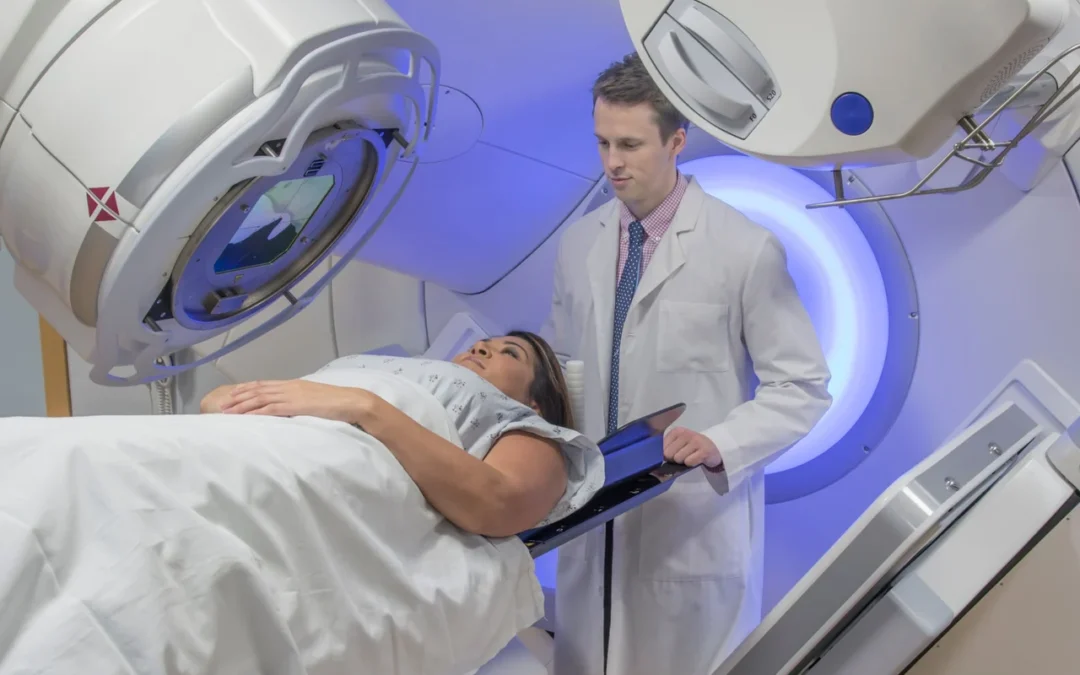
Radiation is needed after breast cancer surgery in most women who undergo breast-conserving surgery and in selected mastectomy cases with high recurrence risk. It targets cancer cells that may remain in the breast, chest wall or nearby lymph nodes after the tumour is removed. A standard course runs three to six weeks, and skipping it when it’s indicated raises local recurrence by two to three times.
According to Prof. Dr. Sandeep Nayak, Surgical Oncologist in Bangalore, India, “Radiation after breast cancer surgery isn’t optional in most lumpectomy cases. It’s the step that brings local control on par with mastectomy. When it’s skipped without good reason, recurrence rates climb sharply, and the option of breast conservation loses much of its value.”
Wondering if your case needs radiation after surgery?
When Is Radiation Recommended After Surgery?
Radiation isn’t given to everyone. The decision depends on the type of surgery, the tumour, and what pathology shows.
- Lumpectomy – Almost every breast-conserving surgery is followed by radiation to the remaining breast tissue, since the operation alone leaves a real risk of cancer cells regrowing locally.
- Mastectomy – Radiation is added after mastectomy when the tumour was large, when multiple lymph nodes were involved, or when surgical margins were close, all of which raise the chance of chest wall recurrence.
- Nodes – Involvement of four or more axillary nodes almost always brings radiation into the plan, and even one to three positive nodes often does too, depending on tumour biology.
- Margins – Positive or close surgical margins on pathology shift the decision firmly toward radiation, because it covers the area surgery couldn’t fully clear.
The surgery type itself sets much of this in motion, and our page on types of surgeries explains how the choice between lumpectomy and mastectomy shapes everything that follows.
How Is Radiation Given and What Should You Expect?
Radiation today is precise, image-guided, and far gentler than what it was a generation ago.
- Planning – A CT-based simulation maps the exact area, and shielding is built in to protect the heart, lungs and opposite breast, especially when the cancer is on the left side.
- Delivery – Most regimens use external beam radiation given five days a week, with sessions lasting around 15 minutes and the patient walking in and out the same day.
- Schedule – Standard whole-breast schedules run three to six weeks, while modern shorter hypofractionated regimens condense it to one to three weeks, and the choice is decided as part of radiation therapy planning.
- Side effects – Skin redness, fatigue and mild swelling are common and usually settle within weeks, while serious effects on heart or lung are rare with modern technique.
The benefit only stands when surgery and radiation are sequenced correctly, and our blog on early detection explains why catching cancer at an earlier stage keeps both surgery and radiation more limited.
Why Choose Dr. Sandeep Nayak for Breast Cancer Care in Bangalore?
Dr. Sandeep Nayak brings over 20 years of surgical oncology experience, DNB qualifications in Surgical Oncology and General Surgery, an MRCS from the UK and a fellowship in Laparoscopic and Robotic Surgical Oncology to breast cancer care at KIMS Hospital, Bangalore. He’s the recipient of the K Subhramanyam Robotic Innovation Award 2023 and serves as Executive Director of Surgical Oncology and Robotic Surgery, with originator credits for advanced minimally invasive techniques and over 25 published clinical studies.
Each patient’s plan is built around the surgical pathology and tumour biology, so radiation is added only when it genuinely improves outcomes, never as a default. Tumour board review keeps the decision precise. Call +91 8035740000 to book your consultation.
FAQ
Is radiation always needed after breast cancer surgery?
No, it’s standard after lumpectomy and selected mastectomy cases, not after every surgery.
How long does radiation treatment last?
Standard schedules run three to six weeks; shorter hypofractionated courses take one to three weeks.
What happens if radiation is skipped when recommended?
Local recurrence risk rises two to three times, which can undo the benefit of breast-conserving surgery.
Are the side effects of radiation serious?
Most side effects are mild and short-term; serious effects on heart or lung are rare with modern techniques.
Disclaimer
This blog is shared for educational and informational purposes only. It isn’t a substitute for professional medical advice, diagnosis or treatment.