
Breast Cancer Diagnosis and Staging


A breast cancer diagnosis is more than detecting a lump—it is a precise process to diagnose cancer, identify its type, and how far it has spread. This process is essential for selecting the most appropriate treatment and ensuring the best possible outcome.
At MACS Clinic, a center of excellence for breast cancer surgery in Bangalore, we follow a systematic approach using state-of-the-art technology and internationally applied protocols. From clinical examinations to imaging and biopsy, every step in the breast cancer diagnostic tests is designed to provide clarity and confidence in the diagnosis.
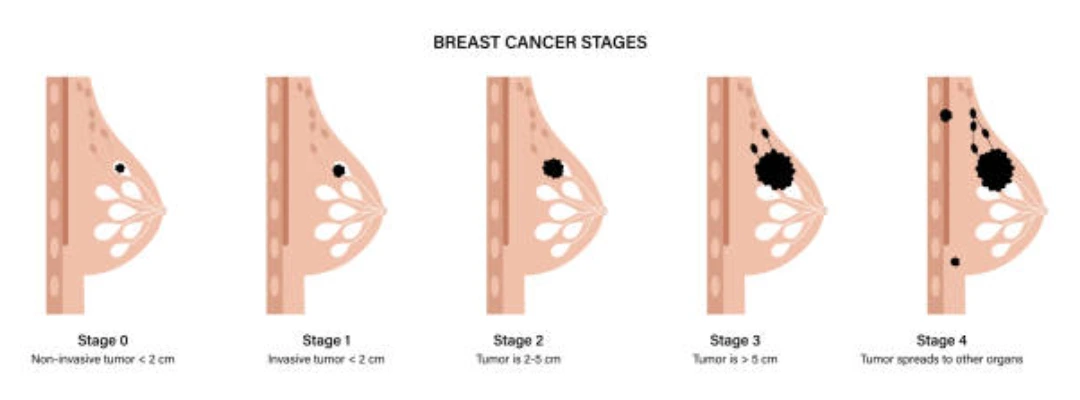
Staging also assists us in knowing the progression of the disease. Using tools such as PET-CT scans, we are able to determine if cancer has spread outside the breast and lymph nodes, enabling us to plan the treatment accordingly.
Initial Evaluation of Breast Lump
A thorough physical examination is the first step:
Detailed breast examination
Lymph node evaluation
Risk factor assessment
Patient history

If the lump feels suspicious, imaging tests are suggested:
Mammography
Breast ultrasound
Breast MRI

Tissue Diagnosis
1. Core Needle Biopsy
The core needle biopsy for breast cancer is the gold standard for diagnosis. It is done by removing small cylinders of tissue from the breast lump through a hollow needle, usually under the guidance of ultrasound. It is a minimally invasive, safe procedure that is highly accurate.
The biopsy results help determine:
- Type of breast cancer (such as ductal or lobular)
- Tumor grade, which indicates how aggressive the cancer is
- Hormone receptor status, an important factor in determining treatment options.

2. Immunohistochemistry (IHC)
After the biopsy, the tissue sample undergoes immunohistochemistry (IHC) testing. This is a mandatory step that provides deeper insights into the biology of the tumor.
IHC helps evaluate:
- Estrogen receptor (ER) and Progesterone receptor (PR) status – to determine if the cancer is hormone-sensitive
- HER2/neu status – a protein that, if overexpressed, can make the cancer more aggressive but also more responsive to targeted therapy
- Ki-67 proliferation index – which measures how rapidly the cancer cells are dividing

Staging Workup After Confirmed Cancer
1. Initial Blood Tests
Before imaging, basic blood tests are done to evaluate the patient’s overall health and organ function:
Complete blood count (CBC) checks for anemia or abnormal blood cells
Liver function tests (LFTs) to assess liver function
Kidney function tests important before certain treatments

2. PET-CT Scan
We routinely recommend PET-CT scanning for all breast cancer patients. It offers a complete staging evaluation in a single scan, and it is a key part of our approach at MACS Clinic.
Why PET-CT?

- Provides full-body staging in one test
- More accurate than conventional imaging
- Detects hidden (occult) metastases early
- Helps tailor treatment plans with precision
- Easily accessible at our center unlike in western (like UK, USA, Canada, etc.) and underdeveloped countries.
- Less stressful for patients—just one scan
- Serves as an excellent baseline to track treatment response
3. Additional Imaging (if needed)
- MRI scan of breast.
- Isotope bone scan

Special Considerations
1. For Young Patients

Breast cancer in younger individuals often raises additional concerns beyond standard diagnosis and treatment.
- Genetic counseling is advised, particularly in the presence of a family history of cancer or if the patient is less than 50 years or certain types of breast cancer.
- BRCA testing may be advised to evaluate inherited risk and guide both treatment and preventive decisions.
- Fertility preservation must be addressed prior to initiating treatment since chemotherapy and other treatments are known to affect fertility in the future.
For young women, diagnostic tests for breast cancer may also include breast MRI in addition to ultrasound or mammography, as younger breast tissue can be denser and more difficult to assess.
2. For Elderly Patients

Patients who are older have other challenges, such as coexisting health conditions that should be taken into account in the treatment and diagnostic plan.
- A cardiac evaluation is essential before starting treatments like chemotherapy, which can impact the heart’s function.
- Careful assessment of comorbidities such as diabetes, hypertension, or kidney disease is vital for safe planning.
- Modified treatment protocols may be recommended to minimize side effects while maintaining effectiveness.
Advanced Molecular Testing in Breast Cancer
In selected cases, especially early-stage hormone receptor-positive cancers, advanced molecular tests are used to better understand tumor biology and guide treatment decisions. These tests analyze the genetic makeup of the tumor to determine its behavior and likelihood of recurrence.
When indicated, we may recommend:
CanAssist Breast
Oncotype DX
MammaPrint

Other genomic tests
BRCA testing
FAQs
What is the first step in diagnosing a breast lump?
What type of biopsy is used to confirm breast cancer?
What are ER, PR, and HER2 tests in breast cancer diagnosis?
Why is a PET-CT scan important in staging breast cancer?
Are genetic tests necessary for all breast cancer patients?
What are Oncotype DX and MammaPrint used for?
Disclaimer: The information provided here is for educational use only and not to promote.