
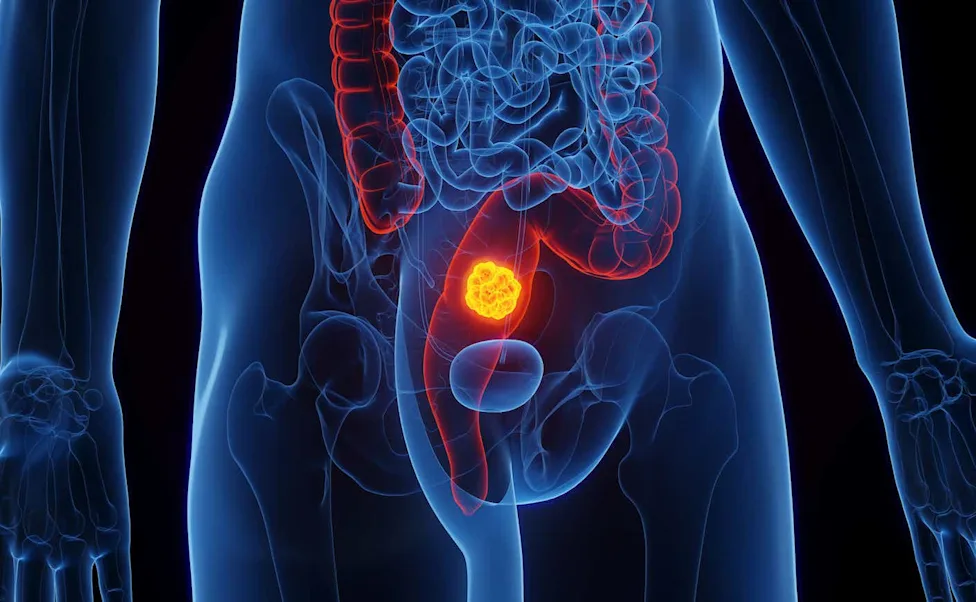
The main difference between colon and rectal cancer lies in their location and treatment approach. Colon cancer develops in the longer upper portion of the large intestine, while rectal cancer occurs in the final 15 centimetres before the anus. Although both fall under colorectal cancer, they differ in surgical complexity, radiation use, and recovery patterns.
According to Dr. Sandeep Nayak, colorectal cancer, “Rectal tumours sit in a much tighter anatomical space than colon tumours, which is why they often need radiation before surgery and a far more delicate approach to preserve bowel function.”
Confused about whether your diagnosis is colon or rectal cancer?
How Do Colon and Rectal Cancer Differ in Location and Anatomy?
The colon and rectum sit next to each other but behave very differently in cancer terms.
- Location Colon cancer can develop anywhere along the 1.5-metre stretch of large intestine, while rectal cancer is limited to the final 15 centimetres before the anus.
- Space The rectum sits inside a tight bony pelvis surrounded by nerves and blood vessels, which makes rectal surgery technically harder than colon resection.
- Function The colon mostly absorbs water and forms stool, but the rectum stores it and controls timing, so tumours here can affect continence in ways colon tumours rarely do.
- Symptoms Rectal cancer tends to cause bleeding, urgency, and a sense of incomplete emptying early on, whereas colon cancer often stays silent until anaemia or weight loss appears.
Accurate staging is what guides the right treatment path for either cancer.
How Does Treatment Differ for Colon and Rectal Cancer?
But treatment plans diverge significantly between the two, even though both are called colorectal cancer.
- Surgery Colon cancer surgery focuses on removing the affected bowel segment with wide margins, while rectal cancer often demands sphincter-preserving techniques like ISR or robotic ultra-low anterior resection.
- Radiation Pre-operative radiation is standard for rectal cancer to shrink the tumour before surgery, whereas colon cancer treatment rarely involves radiation at all.
- Stoma A temporary stoma is sometimes needed after low rectal surgery, but colon resections almost never require one.
- Recovery Recovery tends to be faster after colon surgery because the abdomen heals more predictably than the deep pelvic region.
So expertise across both anatomies matters most, and our earlier blog on robotic surgery shows how the same precision techniques apply across colon and rectal cases.
Why Choose Dr. Sandeep Nayak for Breast Cancer Care in Bangalore?
Dr. Sandeep Nayak is among India’s most experienced colorectal surgeons, with over 20 years spanning both colon resections and complex rectal procedures including robotic ISR and TaTME. He heads Surgical Oncology and Robotic Surgery at major Bangalore hospitals and trains surgeons across the country in minimally invasive techniques.
His patients see one of the highest sphincter-preservation rates in India, lower complication numbers than the national average, and smoother recovery overall. One surgeon, both anatomies, deeply understood. That’s what shifts the outcome.
Call +91 9482202240 to book your consultation.
FAQ
Is colorectal cancer the same as colon cancer?
No, colorectal cancer covers both colon and rectal cancer, which differ in location and treatment.
Which is harder to treat, colon or rectal cancer?
Rectal cancer is technically harder due to its tight pelvic location and need for radiation.
Does rectal cancer always need a stoma?
No, most rectal cancers can now be treated without a permanent stoma using sphincter-saving surgery.
Are symptoms different for colon and rectal cancer?
Yes, rectal cancer causes bleeding and urgency earlier, while colon cancer often stays silent longer.
Reference
- Colorectal Cancer Treatment — National Cancer Institute
- Colorectal Cancer Fact Sheet — World Health Organization