

Most men are surprised to learn they can develop breast tissue at all, let alone breast cancer. Yet swelling of the male chest is common, and the vast majority of cases are harmless, caused by a benign condition called gynecomastia. Only a small number turn out to be something serious. Male breast cancer makes up less than one percent of all cases. The trouble is that embarrassment keeps many men from seeking help, and by the time they do, a treatable problem may have progressed.
“Men rarely think breast cancer applies to them, so they wait. That delay is why male breast cancer is often caught at a later stage. Any hard, one-sided lump deserves a check, not an assumption,”
states Dr. Sandeep Nayak. Knowing the difference between male breast enlargement and cancer lets men act sensibly, without panic or dangerous delay.
Dr. Sandeep Nayak, a noted surgical oncologist with over 24 years of experience, has pioneered minimally invasive and robotic breast cancer techniques in India. His work spans both benign and malignant breast conditions, giving men a rare advantage: an expert who can distinguish the harmless from the serious with certainty.
This blog explains what men need to know about breast enlargement, when it is harmless, and when it needs urgent attention.
What Is Male Breast Enlargement?
Male breast enlargement, medically known as gynecomastia, is the benign growth of glandular breast tissue in men. It is far more common than most people realize.
- Real glandular tissue. It involves genuine breast tissue growth, not simply fat deposits.
- Extremely common. It affects a large proportion of men during puberty and again in older age.
- Often bilateral. It typically affects both sides, though sometimes unevenly.
- Usually soft and mobile. The tissue feels rubbery and moves freely under the skin.
- Frequently tender. Mild pain or sensitivity is common, particularly in the early stages.
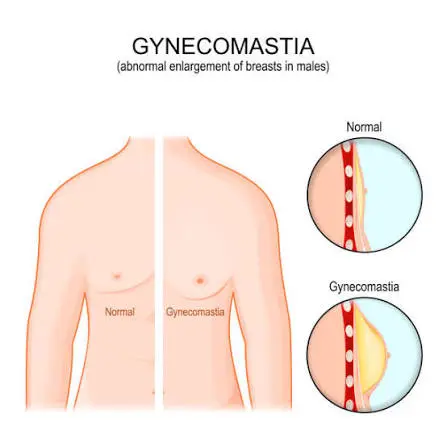
It is important to distinguish this from pseudogynecomastia, which is simply fat accumulation in the chest without glandular growth. The two require different approaches, hence the expert team at MACS prioritizes proper evaluation for male breast enlargement treatment in Bangalore.
Does breast enlargement in men turn into cancer? Let’s dive into the answer directly.
Can Male Breast Enlargement Lead to Cancer?
This is the question that brings most men to a doctor, and the answer is reassuring but nuanced.
- Gynecomastia does not become cancer. The condition itself is benign and does not transform into malignancy.
- They can coexist. A man can have gynecomastia and, separately, breast cancer.
- It can mask cancer. Enlargement may make a small tumor harder to notice.
- Shared risk factors. Some conditions, like Klinefelter syndrome, raise the risk of both.

- Evaluation is essential. Only examination and imaging can distinguish the two with confidence.
So, gynecomastia is not a precursor to cancer. But its presence should never be assumed to explain every lump or change, and any new or asymmetric finding deserves assessment.
Noticed a change in your chest?
Do not assume it is nothing. Get it evaluated by a specialist today.
Why does this happen to men in the first place? Let’s discover the underlying causes.
What Causes Gynecomastia in Men?
Gynecomastia arises from an imbalance between estrogen and testosterone. Several factors can tip this balance:
- Hormonal life stages. Newborns, adolescents, and older men experience natural hormonal shifts.
- Medications. Anti-androgens, some heart medications, antidepressants, and anabolic steroids are common culprits.
- Liver or kidney disease. These impair hormone metabolism and clearance.

- Thyroid disorders. Hyperthyroidism can alter the hormonal balance.
- Testicular or adrenal tumors. Rare, but they may produce hormones that stimulate breast tissue.
- Alcohol and substances. Chronic alcohol use, cannabis, and certain drugs contribute.
- Obesity. Excess fat tissue converts testosterone into estrogen.
Identifying and addressing the underlying cause is often the first step, and in many cases, the enlargement resolves once the trigger is removed.
What can actually be done about it? Let’s explore the treatment options.
Treatment Options for Gynecomastia
Treatment depends entirely on the cause, duration, and severity of the condition.
- Observation. Pubertal gynecomastia often resolves on its own within one to two years.
- Treating the cause. Stopping a causative medication or managing liver or thyroid disease may reverse it.
- Medication. In select early cases, hormonal medications may reduce glandular tissue.


- Surgery. Gynecomastia surgery in Bangalore entails removing glandular tissue and reshaping the chest.
- Liposuction. Used alongside surgery when fat is a significant component.
- Combined approach. Most surgical cases benefit from both gland excision and liposuction.
Long-standing gynecomastia, present for more than a year, becomes fibrotic and rarely responds to medication. In these cases, male breast reduction surgery in Bangalore offers the most reliable and lasting result, with excellent cosmetic outcomes in experienced hands.
Where is the line between a harmless lump and a real concern? Let’s go through the warning signs.
When Should Men Worry About Breast Enlargement?
Most enlargement is benign. But certain features shift the picture and demand prompt evaluation.
- A hard, fixed lump. Especially one that does not move freely under the skin.
- One-sided swelling. Unilateral enlargement is more suspicious than bilateral.
- Off-center location. A lump away from the nipple, rather than directly beneath it.
- Nipple changes: retraction, inversion, ulceration, or scaling of the skin.
- Nipple discharge. Particularly if bloody or clear and spontaneous.
- Skin changes: dimpling, puckering, or an orange-peel texture.
- Lymph node swelling. Any lump felt in the armpit.
- Rapid growth. Swelling that enlarges quickly without an obvious cause.
Any of these features warrants immediate assessment. They do not confirm cancer, but they cannot be explained away without investigation.
How do you actually tell the two apart? Let’s break down the key differences.
Gynecomastia vs Male Breast Cancer: Key Differences
The two conditions differ in several important ways, though only a doctor can confirm which is present.
|
Feature |
Gynecomastia |
Male Breast Cancer |
|
Frequency |
Very common |
Rare, under 1% of breast cancers |
|
Sides affected |
Usually both |
Almost always one side |
|
Location |
Directly beneath the nipple |
Often off-center from the nipple |
|
Texture |
Soft, rubbery, mobile |
Hard, firm, fixed |
|
Borders |
Poorly defined, diffuse |
Well defined, distinct lump |
|
Tenderness |
Often tender |
Usually painless |
|
Nipple changes |
Rare |
Retraction, discharge, ulceration possible |
|
Skin changes |
Absent |
Dimpling or puckering may occur |
|
Lymph nodes |
Not involved |
May be enlarged in the armpit |
The overlap is real, and appearances deceive. This is precisely why any suspicious lump needs proper evaluation rather than self-diagnosis. Timely assessment is central to effective male breast lump treatment in Bangalore at MACS Clinic.
Are some men at greater risk than others? Let’s explore who needs extra vigilance.
Who Has a Higher Risk of Male Breast Cancer?

Male breast cancer is rare, but certain factors raise the risk considerably:
- Risk rises with age, with most cases diagnosed after 60.
- Family history. A close relative with breast cancer, male or female, increases risk.
- BRCA2 mutations. Carriers face a substantially elevated lifetime risk.
- Klinefelter syndrome. This chromosomal condition significantly raises the risk.
- Radiation exposure. Previous chest radiation therapy increases risk.
- Liver disease. Cirrhosis alters hormone levels and elevates risk.
- Estrogen exposure. Hormone therapy or certain medications contribute.
- Excess weight raises estrogen levels.
- Testicular conditions. Undescended testes, mumps orchitis, or testicular injury.
Men with a family history of breast cancer, especially with a known BRCA2 mutation, should discuss genetic counseling and surveillance with a specialist offering cancer treatment in Bangalore.
Conclusion
Male breast enlargement is common and almost always benign. Gynecomastia does not turn into cancer and is usually treatable once the cause is found. Still, that reassurance should never become a reason to ignore changes in your chest. A hard, one-sided, painless lump, especially one away from the nipple or with skin changes, needs prompt evaluation.
Male breast cancer is rare, yet often diagnosed late simply because men never consider it possible. Dr. Sandeep Nayak offers expert evaluation and advanced breast cancer treatment in Bangalore, helping men tell the harmless from the serious with clarity.
FAQ
1. Can male breast enlargement turn into cancer?
No. Gynecomastia is benign and does not transform into cancer, though the two conditions can exist separately in the same person.
2. What is gynecomastia?
Gynecomastia is the benign enlargement of glandular breast tissue in men, usually caused by a hormonal imbalance.
3. Is gynecomastia painful?
It often causes mild tenderness or sensitivity, particularly in the early stages. Cancerous lumps are typically painless.
4. Does gynecomastia go away on its own?
Pubertal gynecomastia often resolves within one to two years. Long-standing cases usually require surgery.
5. When should a man see a doctor about breast enlargement?
See a doctor for any hard, fixed, or one-sided lump, nipple discharge or retraction, skin dimpling, or rapid growth.
6. What is the treatment for gynecomastia?
The options for gynecomastia treatment in Bangalore include observation, treating the underlying cause, medication in early cases, and surgery for persistent enlargement.
7. Is male breast cancer treatable?
Yes. It is treated much like female breast cancer, with surgery, radiation, and systemic therapy. Early detection improves outcomes greatly.
8. Who is at higher risk of male breast cancer?
Older men, those with a family history, BRCA2 mutations, Klinefelter syndrome, liver disease, obesity, or prior chest radiation.
References
Disclaimer
This blog is shared for educational and informational purposes only. It isn’t a substitute for professional medical advice, diagnosis or treatment.